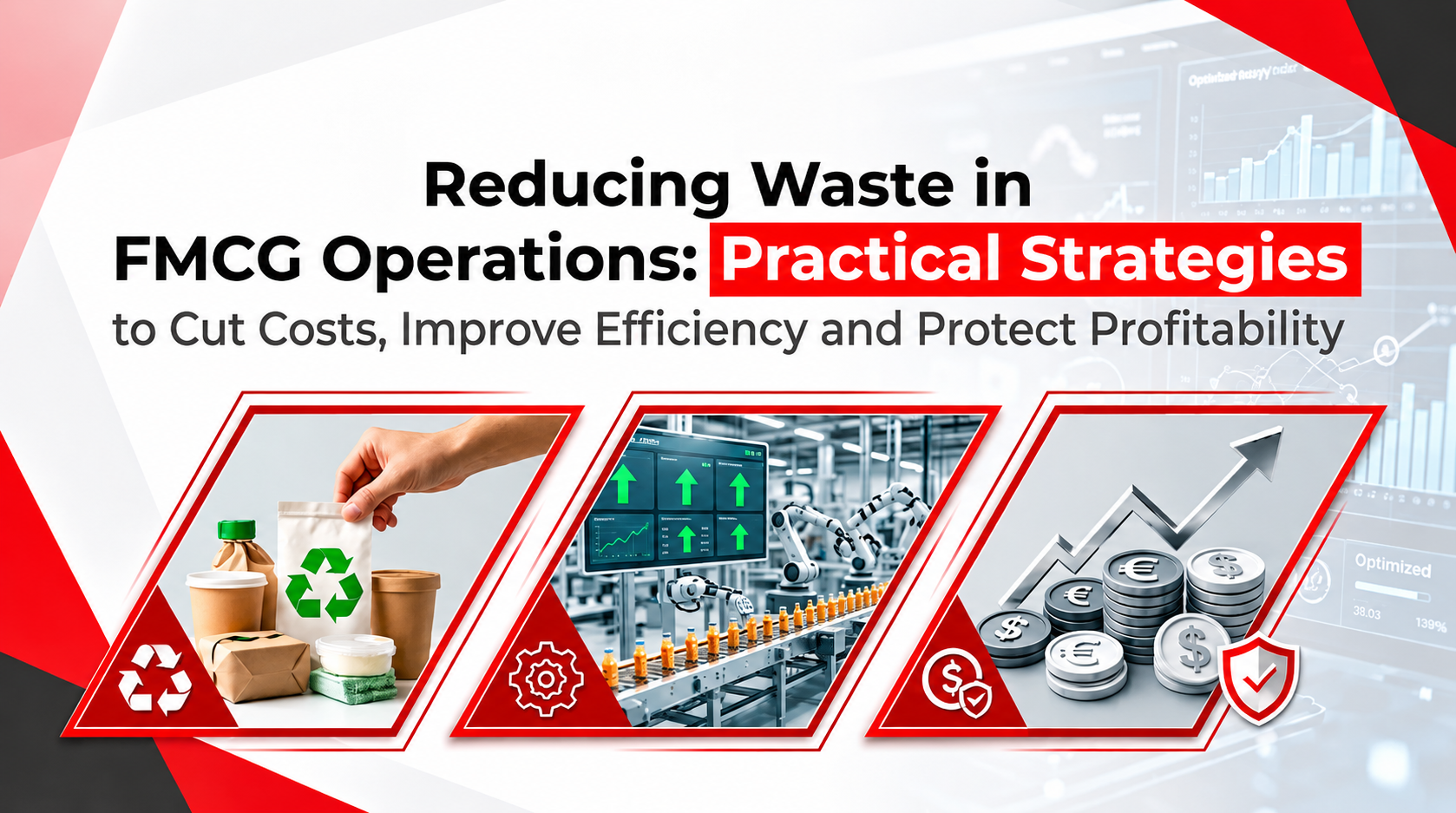
Waste is one of the biggest operational challenges businesses face, particularly in the Fast-Moving Consumer Goods (FMCG) industry. While some waste may be unavoidable in production and distribution, minimising it gives businesses a significant competitive advantage.
For FMCG businesses, waste is more than discarded products or unused raw materials. It is money that is lost through inefficient processes, damaged inventory, and production errors. Also, waste is incurred through excessive packaging, poor storage, and resources that are consumed without adding value.
In the FMCG industry, where products move in high volumes and profit margins can be tight, even small reductions in waste can meaningfully improve business performance.
How Much Waste Are FMCG Businesses Generating?
Waste is not simply an environmental concern. It is an operational and financial issue. The scale of food-related losses, for example, indicates the challenge facing food and beverage manufacturers.
A 2025 study published in the Journal of Social and Management Sciences, examining three FMCG companies in Nigeria, found a significant relationship between inventory wastage and business performance. It reports that inventory wastage is a major challenge in FMCG operations.
Common Categories of Waste in FMCG Operations
Not every FMCG business experiences waste in the same way. A food and beverage manufacturer, a cosmetics producer, and a household cleaning products company will have different operational risks.
However, common categories include:
- Raw material waste: Excessive use, spillage, contamination, expired ingredients, and poor handling of production inputs.
- Production waste: Defective products, incorrect formulations, machine-related losses, production errors, and materials discarded during equipment changeovers.
- Packaging waste: Damaged cartons, defective bottles, excess packaging materials, incorrect labelling, and packaging errors.
- Inventory waste: Overstocking, expired products, obsolete stock, poor stock rotation, and products damaged during storage.
- Quality and rework waste: Products that fail quality checks and require correction, repackaging, or complete disposal.
- Logistics and distribution waste: Product damage during transportation, poor warehouse handling, and losses resulting from inadequate storage conditions.
- Energy and resource waste: Excessive consumption of electricity, water, fuel, and other resources due to inefficient equipment or processes.
How Can FMCG Businesses Reduce Operational Waste?
Identifying waste is important, but sustainable improvement requires a structured approach. Here are practical steps that FMCG businesses can use to reduce operational waste:
1. Measure Waste at Every Point of the Production Flow
You cannot effectively reduce what you do not measure. FMCG businesses should establish waste measurement at every point where products, raw materials, packaging, or other resources leave the production flow.
For example, track the quantity of raw materials issued against finished products, record rejected units, measure packaging losses, and document damaged or expired inventory.
These measurements should be recorded consistently and compared against production volumes. This helps businesses establish waste rates, identify unusual increases, and understand where the greatest losses occur.
2. Connect Waste to Its Root Cause
Recording waste tells you what happened. But when you understand the root cause, you gain insight into what needs to change.
When a production line records an increase in defective products, for instance, the immediate response should not simply be to discard the affected units.
Investigate why the defects occurred. Was there a machine calibration problem? Were production instructions unclear? Did the raw materials fail quality checks? Was an employee inadequately trained?
The point is: you must move beyond surface-level explanations and identify the underlying causes of recurring losses.
3. Remove the Cause of Waste
Once the root cause is established, implement corrective measures that prevent the problem from recurring.
This could involve equipment maintenance, improved production procedures, or better supplier quality checks. It can also be staff training, inventory controls, or adjustments to packaging and storage processes.
The objective is not simply to manage waste after it occurs, but to redesign processes so that less waste is generated.
Make Waste Reduction an Operational Priority
Reducing waste in FMCG operations requires more than occasional inspections or cost-cutting exercises. It demands accurate measurement, proper investigation, accountability, and continuous improvement.
Businesses that understand where their resources are being lost can make better operational decisions, improve productivity, protect profit margins, and use resources more efficiently.
At Smart Partners Consulting Limited, we believe sustainable business performance begins with stronger people, processes, and organisational capabilities. If your business is looking to improve operational effectiveness and build the capabilities required for growth, speak with our team.
📞 +234 903 475 2035
✉️ info@smartpartnersng.com