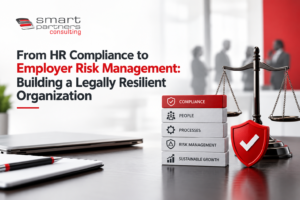
On 16th September, 2026, Smart Partners Consulting Limited, a foremost and indigenous management consulting firm in Nigeria, hosted a timely webinar on a critical topic that concerns every business. The virtual event, themed “From HR Compliance to Employer Risk Management: Building a Legally Resilient Organization,” brought together business leaders, HR professionals, and organizational decision-makers for a practical conversation on building a legally resilient organization in Nigeria.
The session featured two speakers, Ituah Imhanze, FCArb, Managing Partner at KENNA, and Tijani Iyemifokhae, Managing Director of Smart Partners Consulting Limited, who brought complementary perspectives to the conversation. While Mr. Imhanze dealt extensively with the legal and employer-risk dimensions of compliance, Mr. Iyemifokhae focused on HR compliance as an organizational responsibility and the systems, processes, and stakeholders needed to make compliance effective.
Compliance Is No Longer Just an HR Responsibility
A central message from the webinar, as shared by Mr. Iyemifokhae, was that HR compliance cannot be left to the HR department alone. Effective compliance requires shared ownership across four key groups — leadership, HR, line managers, and employees.
Leadership sets the tone while HR develops and maintains policies and processes. However, Line managers apply them in day-to-day interactions with employees, while employees provide an important perspective on gaps and unfair practices.
The discussion emphasized that whatever leaders tolerate can become the real standard within an organization.
Policies Alone Do Not Create Compliance
An employee handbook, HR policies, or documented procedures do not automatically make an organization compliant. Organizations must also ensure that those policies are communicated, implemented, monitored, and enforced consistently.
This distinction is critical because many employment risks arise not from the absence of policies, but from the gap between what an organization says it does and what actually happens in practice.
The webinar described compliance as a system, rather than simply a collection of documents—a system that must operate continuously across the organization.
Every Employment Decision Can Create Risk
Another important highlight from the webinar, as shared by Mr. Imhanze, is that recruitment, compensation, discipline, employee conduct, workplace safety, data handling and termination can all carry legal, financial or operational implications.
The discussion also highlighted employment contracts as a critical risk-management instrument. Clear documentation of remuneration, duties, working hours, probation, leave and other employment terms can help establish the rights and obligations of both parties.
The discussion also highlighted the importance of objective recruitment criteria, appropriate documentation and consistency in decisions involving promotions, bonuses, salary adjustments and other employment matters.
From Reacting to Employment Risk to Managing It
Perhaps the most important shift discussed was the move from reactive compliance to proactive employer risk management. Organizations cannot necessarily prevent every workplace dispute or employment challenge.
But they can build systems that help them anticipate risks, assess their exposure, establish preventive controls, and respond effectively when issues arise. This approach is particularly relevant as Nigeria’s regulatory environment continues to evolve across areas including pensions, taxation, employment, and data protection.
For example, PenCom provides for a penalty of at least 2% of unpaid pension contributions for each month of default, while the NDPC’s framework provides for significant financial penalties for certain data-protection violations.
Conclusion
The webinar ultimately challenged organizations to rethink what compliance means. A key lesson is that compliance is not simply about avoiding penalties. It is about building clear policies, sound employment practices, accountable leadership, effective documentation, and systems that help an organization protect both its people and itself.
A legally resilient organization is not one that assumes problems will never occur but one that is prepared when they do.
If your organization needs to move beyond basic compliance and build stronger systems to manage people, processes, and employer risk, contact us today. Smart Partners Consulting Limited can strengthen your people, processes, and organizational systems through practical HR, workforce, and business consulting solutions.
You can also access the webinar recording and revisit the insights Tijani Iyemifokhae and Ituah Imhanze, FCArb, shared on building a legally resilient organization.
If you want to go beyond awareness and build a deeper, practical understanding of employment law and HR compliance, our Employment Law for People Management course is for you.
The pre-recorded course helps HR professionals, managers, and business owners understand the legal considerations behind everyday people-management decisions—from employment contracts and discipline to termination, employee rights, and workplace compliance. You can purchase the pre-recorded course here.