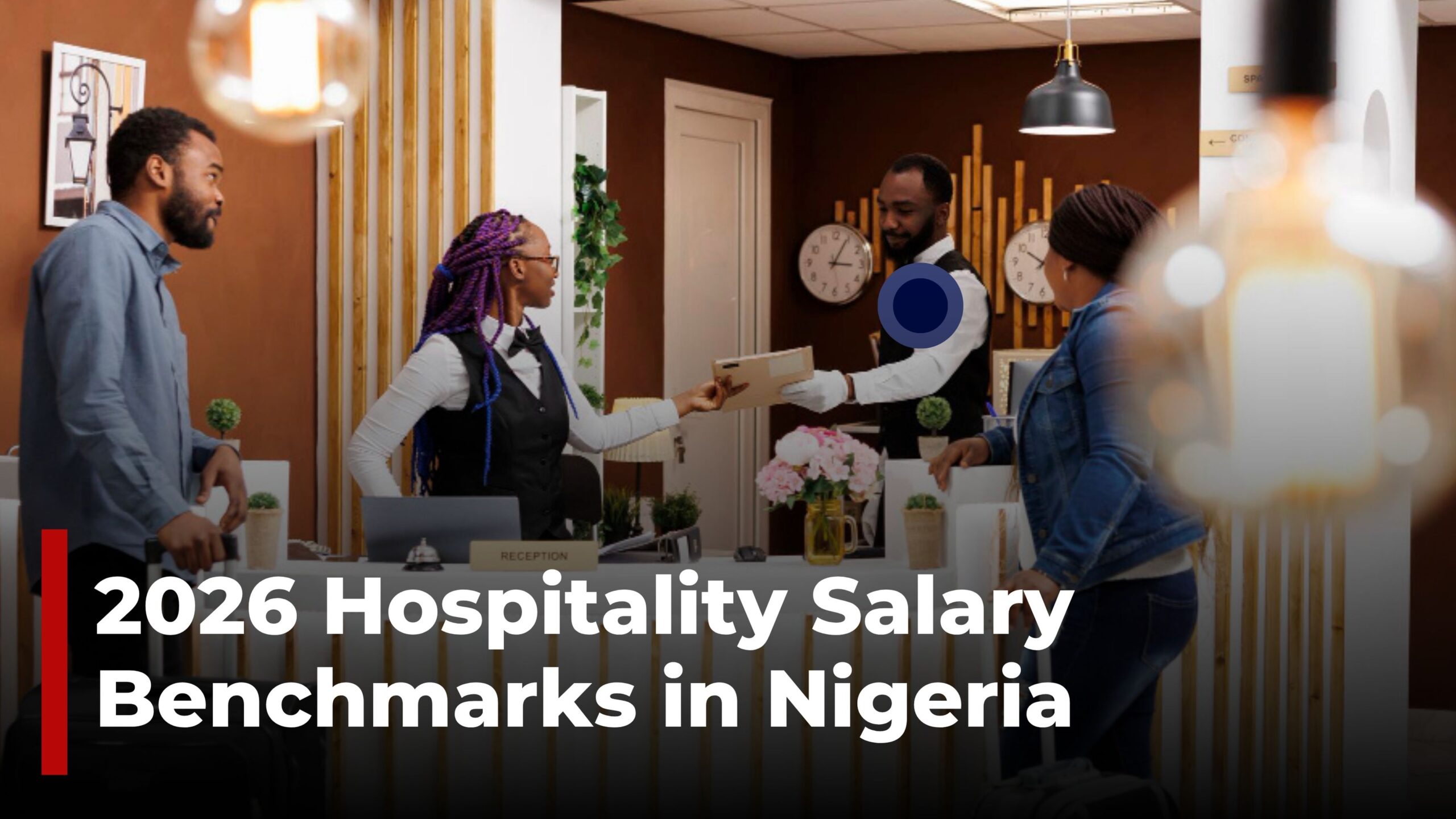
Nigeria’s hospitality sector is steadily recovering and evolving. Increased business travel, expanding tourism, new hotel developments, and growing customer expectations are creating stronger demand for experienced hospitality professionals.
However, one of the major challenges that continues to shape the industry is finding and retaining quality talent at competitive compensation levels.
For hotel owners, HR leaders, and hospitality professionals alike, understanding current salary expectations has become essential for attracting, retaining, and planning talent.
This guide provides a directional overview of hospitality salary bands in Nigeria, alongside the key trends influencing compensation decisions in 2026.
A Note About This Guide
The salary bands presented in this report are intended as directional market benchmarks. They’re not precise salary averages.
They have been compiled using publicly available data, recruiter insights, salary guides, live job market observations, and compensation information from platforms including Profolio Nigeria, Jobberman, Indeed Nigeria, PayScale, WorldSalaries, and other industry sources.
Before setting internal compensation structures, organizations should validate these benchmarks against current job postings, recruiter conversations, company size, and hotel category. They should also consider the geographic location of their business, total rewards package, and their internal compensation philosophy
In other words, salary should always be evaluated alongside benefits, incentives, opportunities for career progression, and organizational culture.
Hospitality Salary Bands in Nigeria (2026)
Role
Entry / Junior
Mid-Level
Senior Level
Front Desk Officer
₦100,000 – ₦180,000
₦180,000 – ₦280,000
₦280,000 – ₦400,000
Guest Relations Executive
₦150,000 – ₦250,000
₦250,000 – ₦400,000
₦400,000 – ₦600,000
Housekeeping Supervisor
₦180,000 – ₦300,000
₦300,000 – ₦500,000
₦500,000 – ₦700,000
Food & Beverage Supervisor
₦220,000 – ₦350,000
₦350,000 – ₦600,000
₦600,000 – ₦900,000
Restaurant Manager
₦300,000 – ₦500,000
₦500,000 – ₦800,000
₦800,000 – ₦1,200,000
Front Office Manager
₦350,000 – ₦600,000
₦600,000 – ₦900,000
₦900,000 – ₦1,300,000
Executive Chef
₦400,000 – ₦700,000
₦700,000 – ₦1,200,000
₦1,200,000 – ₦2,500,000+
Human Resources Manager
₦400,000 – ₦700,000
₦700,000 – ₦1,200,000
₦1,200,000 – ₦2,000,000
Hotel General Manager
₦600,000 – ₦1,000,000
₦1,000,000 – ₦1,800,000
₦1,800,000 – ₦5,000,000+
Note: Market salary bands are indicative and vary by hotel category (budget, mid-scale, luxury), location, employer size, service charge structure, and benefits package.
The Five Compensation Trends Shaping Hospitality in 2026
1. Guest Experience Roles Are Becoming More Valuable
Hotels are increasingly rewarding employees who directly influence guest satisfaction, online reviews, repeat bookings, and brand reputation.
As customer expectations rise, exceptional service has become a competitive advantage.
2. Leadership Roles Continue to Command Premium Pay
Experienced General Managers, Executive Chefs, Front Office Managers, and Food & Beverage Managers remain among the most sought-after professionals.
These leaders influence revenue, operational efficiency, customer experience, and staff performance, making them critical to business success.
3. Benefits Matter Almost as Much as Salary
Compensation today extends beyond monthly pay. Many leading hotels compete through comprehensive total rewards packages that may include health insurance, accommodation, meals while on duty, transportation support, service charge distributions, performance bonuses, and leadership development opportunities
For many candidates, these benefits significantly influence their employment decisions.
4. Skills Are Outweighing Years of Experience
Employers increasingly prioritize professionals who can demonstrate measurable results in guest relations, operational excellence, revenue management, and team leadership.
5. Competition for Talent Is Intensifying
Luxury hotels, international brands, and expanding indigenous chains continue to compete for the same pool of experienced hospitality professionals.
Organizations with competitive compensation, faster hiring processes, and stronger employer brands are better positioned to attract and retain top talent.
What This Means for Employers
The hospitality labour market has become increasingly competitive. Employers that regularly benchmark compensation, invest in employee development, strengthen their employer brand, and create compelling career pathways will enjoy a significant advantage in attracting quality talent.
Waiting until key positions become vacant before reviewing pay structures often results in longer hiring cycles and higher recruitment costs.
Sources
Profolio Nigeria – Hotel Manager Salary Guide (2026). (Profolio)
Profolio Nigeria – Chef Salary Guide (2026). (Profolio)
WorldSalaries – Front Desk Receptionist Salary in Nigeria (2026). (World Salaries)
WorldSalaries – Front Desk Attendant Salary in Nigeria (2026). (World Salaries)
Discover how Everything DiSC® helps leaders improve communication, strengthen teamwork, and translate behavioural insights into better business outcomes. Why Understanding