When organisational performance begins to decline, where do you look first? For many CEOs, the immediate suspects are underperforming KPIs, inefficient processes, inadequate resources, or line managers who aren’t delivering expected results.
While these factors deserve attention, another critical dimension is often overlooked. It is employee behaviour.
An organisation can have well-defined KPIs, competent employees and efficient systems, yet still struggle with execution. Why? Because how people communicate, make decisions, collaborate, handle conflict and respond to pressure directly influences how work gets done.
In many cases, the performance problem is not simply a question of what employees know or can do. It is also about how they behave at work.
Why Employee Behaviour Matters to Operational Performance
Skills determine what employees can do. However, behaviour shapes how they apply those capabilities in everyday work, especially when deadlines are tight, priorities shift, or challenges arise.
Consider an employee who has the technical competence to complete a task but consistently delays decisions. Or a manager who understands team management but struggles to communicate expectations clearly.
Another employee may deliver excellent individual results but resist collaboration. This can create problems for other departments. These examples describe behavioural issues with operational consequences.
Another thing to note is that every organisation already has a behavioural culture, whether leadership has intentionally shaped it or not. It is reflected in how employees respond to accountability, share information, manage disagreements, take initiative and work across departments.
The question is whether these behaviours support the organisation’s performance objectives or work against them.
Understanding Workplace Behaviour Through Everything DiSC
One practical way CEOs can better understand workplace behaviour is through the Everything DiSC® framework. This research-validated personal development and learning experience helps individuals understand their behavioural preferences and tendencies, recognise differences in others, and build more effective workplace relationships.
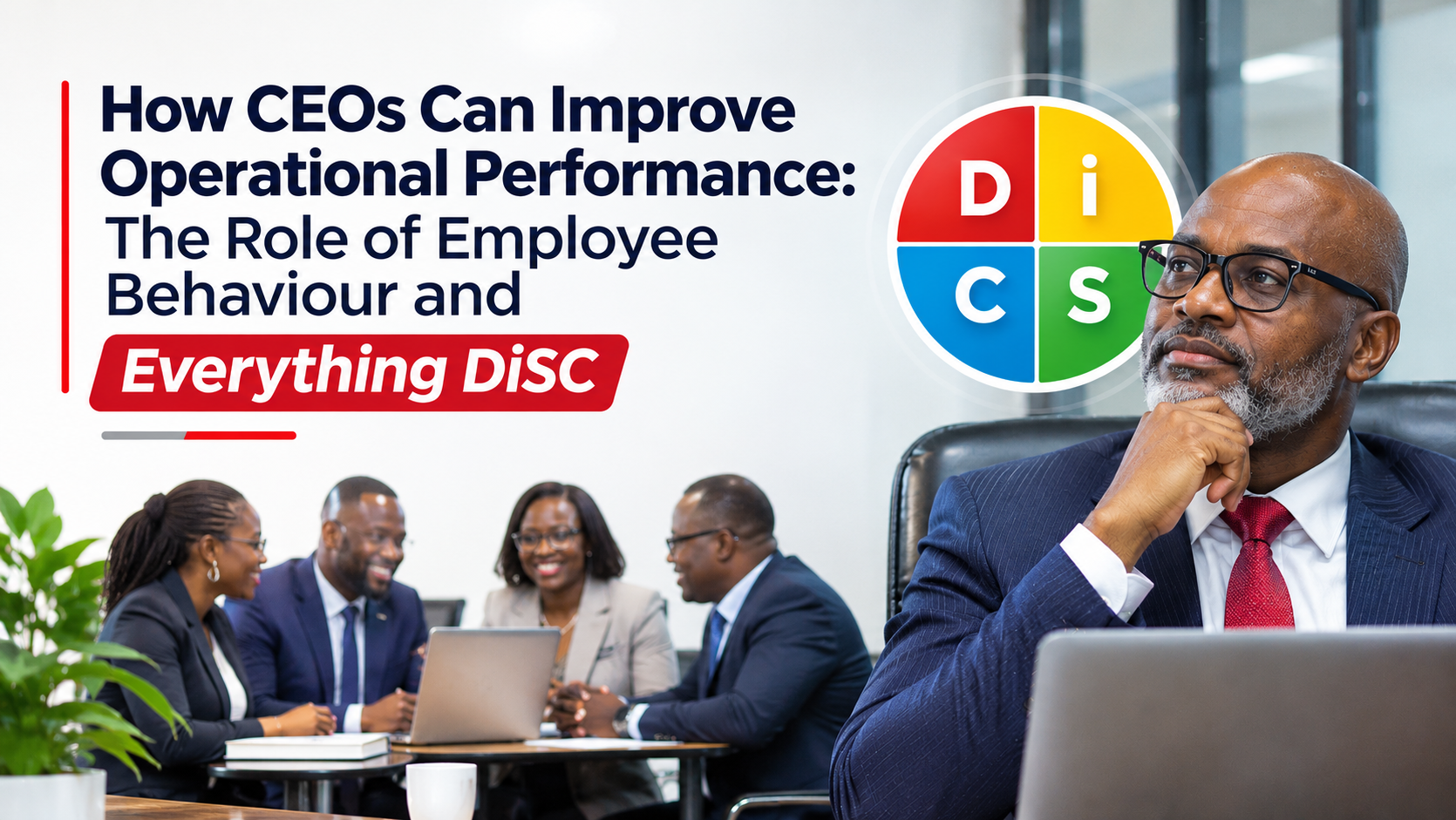
The framework identifies four primary behavioural styles:
- Dominance (D): Direct, decisive and results-oriented. These individuals tend to prioritise action, challenges and getting results.
- Influence (i): Enthusiastic, outgoing and persuasive. They often prioritise collaboration, interaction and influencing others.
- Steadiness (S): Patient, supportive and dependable. They tend to value cooperation, stability and consistency.
- Conscientiousness (C): Analytical, systematic and detail-oriented. They often prioritise accuracy, quality and careful decision-making.
Everyone has a unique combination of these styles. No style is inherently better or worse than another. Understanding these differences helps leaders recognise why employees approach tasks, communicate, and respond differently to workplace situations.
Five Ways CEOs Can Improve Operational Performance Through Behavioural Intelligence
For CEOs who are looking to improve operational performance through behavioural intelligence, here are practical things to do:
1. Develop self-aware leaders.
Leaders must understand how their own behaviour affects the people they manage. Their communication style, decision-making approach and response to pressure can either improve team effectiveness or create unnecessary friction.
2. Improve communication across teams.
Employees don’t all receive information or respond to instructions the same way. Understanding behavioural differences helps managers communicate more effectively, reduce misunderstandings and improve coordination.
3. Build stronger cross-functional relationships.
Operational efficiency depends on departments working together. When teams understand and appreciate different working styles, they are better equipped to manage disagreements, share information and achieve common objectives.
4. Address behavioural challenges, not just performance symptoms.
When an employee consistently misses deadlines or struggles with collaboration, leaders should investigate the underlying behaviour rather than immediately imposing another KPI or disciplinary measure. Clear expectations, feedback, coaching and appropriate support are essential.
5. Make behavioural development part of performance management.
Understanding workplace behaviour should not end after a training session. CEOs and managers should reinforce desired behaviours through regular feedback, leadership development, coaching and measurable performance expectations.
Better Operational Performance Begins with Understanding People
To improve operational performance, you require more than reviewing KPIs, restructuring departments or introducing new systems. You need to understand the people who make those systems work.
Everything DiSC provides organisations with a practical framework for developing behavioural awareness, strengthening workplace relationships and improving how people collaborate.
At Smart Partners Consulting Limited, we help organisations leverage Everything DiSC® to develop more self-aware leaders, build effective teams and create workplace cultures that support better performance.
Ready to improve how your people work together and drive better business performance in 2027? Contact us to explore our Everything DiSC® workplace and leadership development solutions.